Credit Card Payment Processors: Types, Features, and How to Choose

Introduction to credit card payment processors
Credit card payment processors help businesses take electronic card payments by moving data and funds between the people and banks involved in a card transaction. If you want to accept credit and debit cards in-store, online, or on mobile, you typically need a payment service that fits your sales channels and risk level.
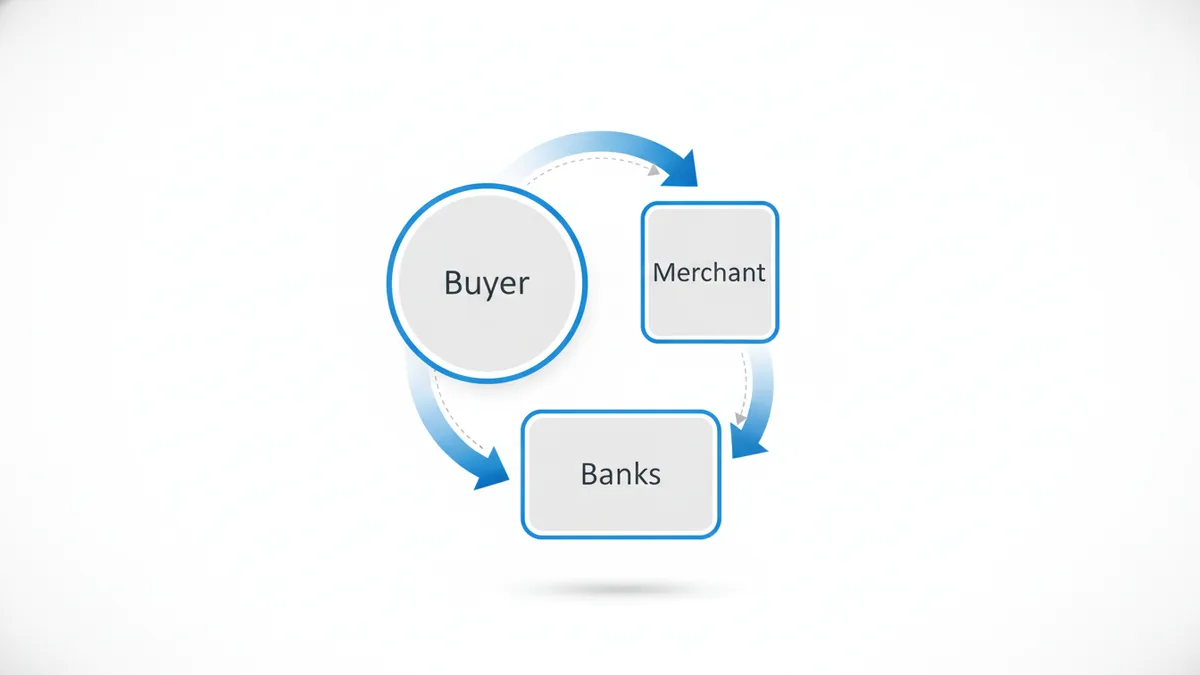
The flow includes a cardholder, a merchant (you), an issuing bank that holds the card account, and an acquiring bank that connects the merchant to the card networks. A payment processor sits in the middle layer and helps route authorization requests, capture payment details, and deliver settlement data.
From a merchant services view, choosing the right card payment processor is about more than checkout buttons. It is about total transaction costs, setup speed, integration fit, uptime, and fraud defenses such as rule-based checks and PCI compliance controls.
To make a good choice, you need clear answers to three questions. Which channels do you sell through today and plan to add later? What will you pay per transaction and per month? How will you handle security, chargebacks, and reporting?
Common types of payment processors and when each fits
Credit card payment processors are not one thing. They come as tools for different environments, from physical checkouts to online storefronts and back-office workflows.
Here are the most common types of payment processing systems, with practical use cases for each.
- POS systems for in-store sales. They combine a register, card reader support, and payment handling in one workflow.
- Mobile credit card readers for pop-up events, curbside pickup, and service businesses. They connect by cellular or via a phone or tablet.
- Online payment gateways for e-commerce. They send card data securely from your website to the processing stack.
- Virtual terminals for phone orders and manual entry. You can process cards without a full web checkout.
Some providers bundle multiple types. For example, a single provider might support in-store POS plus online payments and omnichannel reporting, which can reduce complexity when you scale.
Another difference is how you integrate. Some processors plug into your shopping platform or payment page quickly. Others require deeper API work, which may be fine if you have custom payment software and internal development support.

Key features to consider before you sign
The best card payment processors match your sales flow and risk profile. Focus on the features that affect both customer experience and finance outcomes, especially transaction fees and dispute handling.
Start with pricing transparency. Many processors advertise low rates, but the true total cost includes monthly fees, per-transaction fees, and add-ons for features like fraud tools or chargeback alerts.
Next, look for integration capabilities. If you run e-commerce, check compatibility with your web platform, checkout, and accounting workflow. If you are a service merchant, verify whether you can support invoices, recurring billing, and manual card entry.
Security measures and PCI compliance support are also non-negotiable. Even if your customers enter card details on a hosted checkout page, you still need strong controls around data handling, access, and logging.
- Transparent pricing structures that spell out fees, not just headline rates.
- Reliable authorization and settlement with clear timelines for batch close and funds availability.
- Fraud prevention tools for risk management, including velocity checks and rule-based blocks.
- PCI compliance support and guidance on shared responsibility.
- Omnichannel payments reporting when you sell in multiple channels.
- Support quality for integration issues, outages, and payment failures.
Consider payment types too. If you plan cross-border payments, confirm whether the processor supports multiple currencies, local payment methods, and the compliance steps needed for international processing. Some setups work well domestically but add friction for cross-border cards due to additional checks and different settlement paths.
Finally, evaluate operational control. You want clear reporting fields, refund support, partial captures where appropriate, and webhooks or event feeds that keep your systems in sync.

How to choose the right provider for your business
Choosing among top credit card payment processors comes down to fit. A provider that is strong for a low-volume e-commerce store may not be ideal for a high-volume retail chain with complex returns.
Use a structured comparison so you do not rely on sales claims. Make a short requirements list and test the most risky parts first, like sandbox behavior, refund flows, and webhook delivery.
- List your channels. In-store, online, mobile, and any phone orders you handle today.
- Estimate monthly volume and average ticket. You will use this to compare transaction fees and per-month charges.
- Map your integration path. Decide if you want hosted checkout, POS integration, or API-based processing.
- Check support and onboarding. Ask for example timelines and who will own troubleshooting during the first weeks.
- Review security and PCI compliance approach. Confirm what is handled by the provider and what you must manage.
- Test edge cases. Try a declined card, a timeout, an offline fallback, and a refund after capture.
- Confirm dispute and chargeback workflow. Look for evidence upload tools and clear status updates.
Fees deserve extra attention because they can swing your effective cost. Ask each provider to show a full fee schedule. Then compute your estimated monthly cost using sample transactions, such as 2% of volume plus fixed per-transaction charges.
Here is a simple example of why transparent pricing matters. If you process 20,000 payments per month and a plan charges $0.10 per transaction, that is $2,000 just in per-transaction fees. If another plan adds a monthly platform fee of $300 but lowers the per-transaction charge to $0.07, your per-month savings can be $600 or more, even before you consider refund and chargeback tooling.
Also ask about contract terms. Look for early termination fees, minimum monthly commitments, and whether pricing changes after a pilot period. For risk management, confirm how the processor handles repeated declines, account freezing, and threshold rules.
Top credit card payment processors (what “top” really means)
“Top credit card payment processors” is not a single ranking. For merchants, “top” usually means reliable uptime, strong security, clear pricing, and smooth support during real payment events.
Rather than chasing brand names alone, evaluate providers against your checklist: fit by channel, speed of integration, and operational visibility. If your business is omnichannel, the top choice is often the one that keeps reporting consistent across POS and online.
Below is a practical way to classify leading options you may encounter in the market. Use these categories to guide your research and demos.
| Provider type you may see | Best for | What to verify in a demo |
|---|---|---|
| All-in-one payment platform | Merchants who need POS plus online | Unified dashboard, refunds, and settlement reports |
| API-first processor | Teams with custom checkout or payment software | Webhooks, error codes, and sandbox accuracy |
| Hosted gateway provider | E-commerce teams wanting quick setup | Hosted fields, PCI boundaries, and fraud controls |
| Mobile-first merchant services | Services and on-the-go sales | Reader reliability, battery needs, and offline mode |
If you do online sales and care about conversion, pay attention to checkout latency and payment retries. If you sell high-value items, focus on fraud tooling and risk management workflows. If you process many small transactions, confirm how transaction fees scale and whether you qualify for volume-based pricing.
When you compare vendors, request references or case studies that match your industry and channels. Ask what went wrong during launch and how support handled it. That reveals more than a generic “uptime” claim.
Conclusion
Credit card payment processors enable electronic payments by routing authorization and settlement between cardholders, merchants, issuing banks, acquiring banks, and the processing layer. Understanding that system helps you pick the right tools for your sales channel, not just the cheapest headline rate.
Match processor types to how you sell: POS for retail, mobile readers for on-the-go, online gateways for e-commerce, and virtual terminals for manual or phone orders. Then evaluate key features like PCI compliance support, fraud prevention for risk management, omnichannel reporting, and truly transparent pricing structures.
If you run a clear comparison using transaction volume, sample transactions, and integration tests, you can reduce surprises after launch. The result is better customer experience, fewer payment failures, and more predictable merchant services costs over time.
Frequently asked questions
What is a credit card payment processor, and what does it do?
A credit card payment processor routes authorization and settlement for card purchases. It helps move payment data between the cardholder, merchant, issuing bank, and acquiring bank.
What are the main types of card payment processors?
Common options include POS systems, mobile card readers, online payment gateways, and virtual terminals. The right type depends on whether you sell in-store, online, or through manual orders.
What features should I look for in payment processing?
Look for reliable settlement, support, integration options, fraud prevention, and PCI compliance support. Also compare omnichannel reporting if you sell across multiple channels.
How can I estimate total costs when comparing processors?
Use a full fee schedule, not headline rates. Include monthly fees plus per-transaction charges, and test your estimate with your real monthly volume.
Do I need to worry about PCI compliance if I use a hosted checkout?
Hosted checkout usually reduces your data handling scope, but you still have responsibilities. Confirm the shared responsibility model with your provider before going live.
What does omnichannel payments mean for merchants?
Omnichannel payments let you manage sales across POS, online, and mobile in one ecosystem. It typically includes shared reporting, consistent refunds, and clearer settlement views.