ACH Payment Processing Explained: How It Works for Businesses

Introduction to ACH Payment Processing
If you want a lower-cost way to move money electronically, ACH payment processing is often the answer. ACH stands for Automated Clearing House, a network that routes electronic funds transfer between banks. Businesses use it for direct deposits, recurring bill payments, and eChecks.
This guide explains what is ach payment processing, how it works in practice, and what to watch when you pick software or a processor. You will also see typical ACH processing times, common ACH transaction fees, and how security is handled.
Many teams start with online ACH payment processing, then connect it to their billing and accounting tools. The good news is that implementation is usually straightforward when your data is already in invoices or customer records.
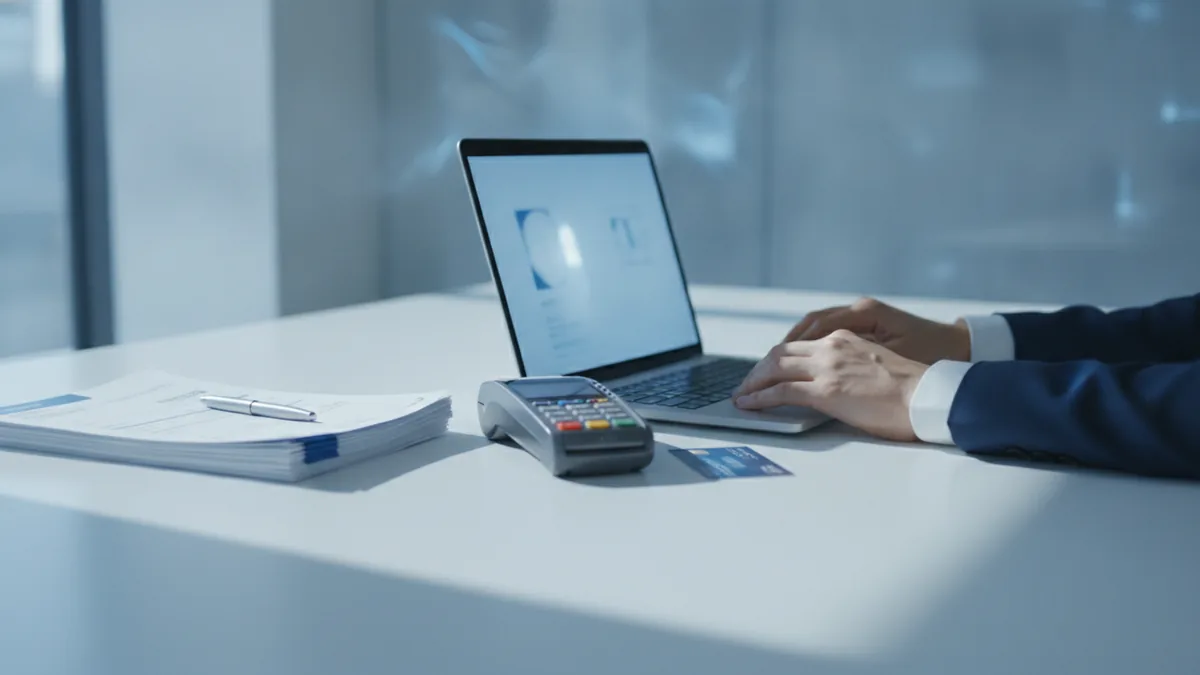
How ACH Payments Work
ACH payments move through a set path between a payer’s bank and a receiver’s bank. Your business initiates a payment by sending transaction details through an ACH processing channel. Those details are validated, then sent to the network for routing.
Think of ACH as batch-based in many cases. Banks group payments into processing windows, so timing depends on when you submit the file or request. That is why ACH processing times can range from same-day to several days.
A common workflow looks like this. You collect bank account details from the customer, create a payment instruction, then submit it via software or a service. After routing, the receiving bank credits the account. You then reconcile the results in your accounting system.
- Step 1: Capture customer bank account and routing numbers.
- Step 2: Create a payment instruction for the right ACH transaction type.
- Step 3: Submit through an ACH payment processor or software platform.
- Step 4: Monitor returns and status updates for reconciliation.
Security and compliance are not an afterthought. ACH payments rely on encryption and rules designed for the network. Organizations like Nacha set standards that processors and banks must follow.
Types of ACH Transactions
When people ask about ACH transaction types, they usually want to know what they can send and how settlement behaves. There are two main types that businesses encounter most often. These are ACH Direct Deposit and ACH Direct Payments.
ACH Direct Deposit is used when you push funds into someone else’s bank account. Payroll is the best-known use case, but direct deposit also supports refunds and other payouts. Your business sends the payment through the network, and the customer’s bank credits the account.
ACH Direct Payments are used when you pull money from a customer’s bank account or pay bills. If you are charging a customer for a subscription or a utility-style bill payment, this is typically the relevant model. It can also power eChecks that look and behave like bank transfers.
| ACH transaction type | Common business use | Direction of funds |
|---|---|---|
| ACH Direct Deposit | Payroll, refunds, payouts | You → Customer bank |
| ACH Direct Payments | Bill pay, subscriptions, invoices | Customer bank → You |
In real life, you must also plan for returns and reversals. Banks may return payments for closed accounts, incorrect details, or other issues. Your ach payment processing setup should include a way to handle those outcomes cleanly.

Benefits of ACH Payment Processing
ACH payment processing can reduce both payment cost and operational work. For many businesses, it is more cost-effective than credit card and ach payment processing alternatives because card networks charge interchange and other fees. ACH transaction fees are often lower, especially for stable recurring collections.
Time savings also show up in your back office. You can reconcile batches instead of manually matching card payouts across multiple settlement reports. With the right integrations, payment data lands directly in your accounting system.
Another practical benefit is support for different payer flows. Customers can set up direct deposit for income, or pay bills using bank accounts. eChecks expand options for customers who prefer bank transfers over cards.
- Lower cost than cards: Often reduces ach payment processing cost for recurring payments.
- Better cash flow planning: Predictable ACH processing times help with forecasting.
- Less manual work: Easier reconciliation with accounting tools.
- Broader customer reach: Supports direct deposit and eChecks.
When you implement it well, the savings can be significant. For example, if your business charges hundreds of invoices per month, even small fee differences compound fast. You also reduce support tickets by offering a payment method that many customers already use with their banks.
Comparison with Other Payment Methods
Credit cards are fast, but they are not always the best fit for every payment. Cards often carry higher effective fees when you consider interchange and processor markups. ACH is usually cheaper for routine, scheduled transactions.
However, ACH is not identical to card payments in speed. ACH processing times may be same-day in some cases, but often take a few business days. If you need instant confirmation, you will need to design your billing flow around ACH settlement windows.
Here is a simple comparison that helps decision-making. Use it to match payment method to your product and customer expectations.
| Method | Typical timing | Cost profile | Best fit |
|---|---|---|---|
| ACH | Same-day to several days | Often lower fees than cards | Recurring bills, invoices, payouts |
| Credit cards | Often near-instant | Higher fees per transaction | One-off purchases, high urgency |
| Wire transfers | Often fast | Usually higher fees | Large payments, urgent needs |
For many businesses, the right approach is mixed. You can accept cards for convenience, then use ACH for recurring charges. That reduces your overall ach payment processing cost while still giving customers options.
Choosing an ACH Payment Processor
Not all ach payment processing companies offer the same mix of features. Some provide simple file-based submissions. Others offer APIs, smart retries, and return handling designed for modern billing systems.
Start by mapping your needs. Do you want online ach payment processing with customer-facing collection forms? Are you sending outbound payments like refunds via ACH Direct Deposit? Your answer determines whether you need a portal, API access, or a managed service.
Next, evaluate speed and how they handle ACH processing times. Ask about cutoff times, settlement windows, and how status updates are delivered. If you run payroll or bill collections on a strict schedule, these details matter.
Cost is also more than the headline fee. Compare processor pricing with ach transaction fees, monthly minimums, and setup costs. Some providers market free ach payment processing for small business, but the real question is whether fees appear elsewhere.
Integration is usually where the decision becomes practical. Most teams should expect to connect payment events to accounting systems. Good processors support export formats and webhooks so you can reconcile payments without hours of spreadsheet work.
- Confirm the transaction types you need. Ensure they support ACH Direct Deposit and ACH Direct Payments.
- Check implementation options. Look for ACH payment processing software with API or plug-in support.
- Verify timing and cutoff rules. Ask how submissions map to same-day or multi-day ACH processing.
- Review security and compliance posture. Confirm encryption practices and adherence to Nacha rules.
- Validate return handling. Ensure your setup can capture and act on returned payments.
If you sell across borders, you may wonder about international ach payment processing. In practice, cross-border bank transfers can involve additional rails and partner banks. You should confirm what “international” means in the provider’s offering before you commit to a rollout.
Conclusion
ACH payment processing is a reliable way to move money electronically through the automated clearing house network. It supports direct deposit for payouts, and direct payments for bill collection and eChecks. Timing can vary from same-day to several days depending on when you initiate the payment.
For most businesses, ACH wins on cost and efficiency. It is often more cost-effective than credit card and ach payment processing options, and it reduces reconciliation work when paired with solid integrations. Strong security matters too, and reputable providers follow encryption and network rules set by bodies like Nacha.
If you are choosing software or an ACH payment processor, focus on transaction support, ACH processing times, integration fit, and real return handling. Once those pieces are aligned, you can roll out online ACH payment processing with less operational friction.
Key FAQs about ACH Payment Processing
What is ach payment processing?
ACH payment processing is the workflow that sends electronic payments through the Automated Clearing House network. It lets businesses collect or pay money using bank accounts instead of cards.
How long do ACH payments take?
ACH processing times can range from same-day to several days. The exact timing depends on submission timing, bank processing windows, and the payment setup.
Are ACH payments secure?
ACH payments use encryption and follow rules set for the network. Processors also use controls to reduce fraud and manage payment exceptions.
What are the main ACH transaction types?
The two main types are ACH Direct Deposit and ACH Direct Payments. Direct deposit is for pushing funds to a bank account, while direct payments are for pulling funds or paying bills.
Can small businesses get free ach payment processing?
Some providers offer low or “free” entry pricing, but fee details vary. Always review all costs, including monthly minimums and ach transaction fees.
Is international ach payment processing available?
Some providers support cross-border flows, but they may rely on partner rails. Confirm coverage, costs, and settlement timing for your target countries.
Frequently asked questions
What is ACH payment processing?
ACH payment processing is the process that sends electronic payments through the Automated Clearing House network. It uses bank accounts instead of card rails.
How long do ACH payments take?
ACH processing times can be same-day or take a few business days. Timing depends on when the payment is initiated and bank processing windows.
What are the two main ACH transaction types?
The two main types are ACH Direct Deposit and ACH Direct Payments. Direct deposit pushes funds to a bank account, while direct payments collect or pay via bank account.
How is ACH payment security handled?
ACH payments use encryption and follow network rules set by Nacha. Processors also apply controls to manage exceptions and reduce fraud risk.
Is free ACH payment processing available for small business?
Some providers offer low entry costs, but pricing structures differ. Review all fees, including transaction and monthly costs, before you switch.
Can I do international ACH payment processing?
Some providers support cross-border flows, but setup can depend on partner rails. Confirm coverage, fees, and settlement times for your specific countries.