Vending Machine Payment Systems: How to Choose, Integrate, and Protect Payments
What a vending machine payment system includes
A vending machine payment system is the combination of hardware, payment logic, and connectivity that lets a customer buy an item and lets the operator reconcile sales. At minimum, it covers the payment interface (cashless and/or cash), authorization flow, transaction logging, and payout/reconciliation integration. In most deployments, it also includes remote monitoring so operators can see payment failures, connectivity issues, and settlement status.
Payment systems for vending typically need to be resilient: the machine must keep selling when the network is available, degrade gracefully when it isn’t, and recover quickly after outages. That means the system should handle offline scenarios carefully - such as queuing transactions for later reconciliation when allowed, or failing fast when offline processing isn’t permitted by the payment network. Operators also need audit trails that make it possible to investigate disputes and chargebacks later.
Whether you’re powering a standalone snack unit or a fleet, the “engine” is usually a backend payment software layer paired with secure communications to the machine. This backend handles tokenization, transaction state, fraud signals, and settlement reporting in formats your finance team can use. For coffee machines with payment system requirements, you’ll also consider longer dispense cycles, tip or account add-ons, and higher uptime expectations in high-traffic locations.
Core components you’ll see in real deployments
- Payment acceptance hardware: card reader, contactless module, NFC, and sometimes bill acceptor and coin mechanisms
- Vending controller integration: machine firmware hooks for price selection, vend authorization, and dispense control
- Local transaction processing: keeps records, validates state transitions, and handles offline rules
- Backend payment services: authorization, token management, dispute support, and settlement reporting
- Monitoring and support tooling: logs, alerts, health checks, and remote configuration for payment options
Common payment flows for vending machine credit card payment system
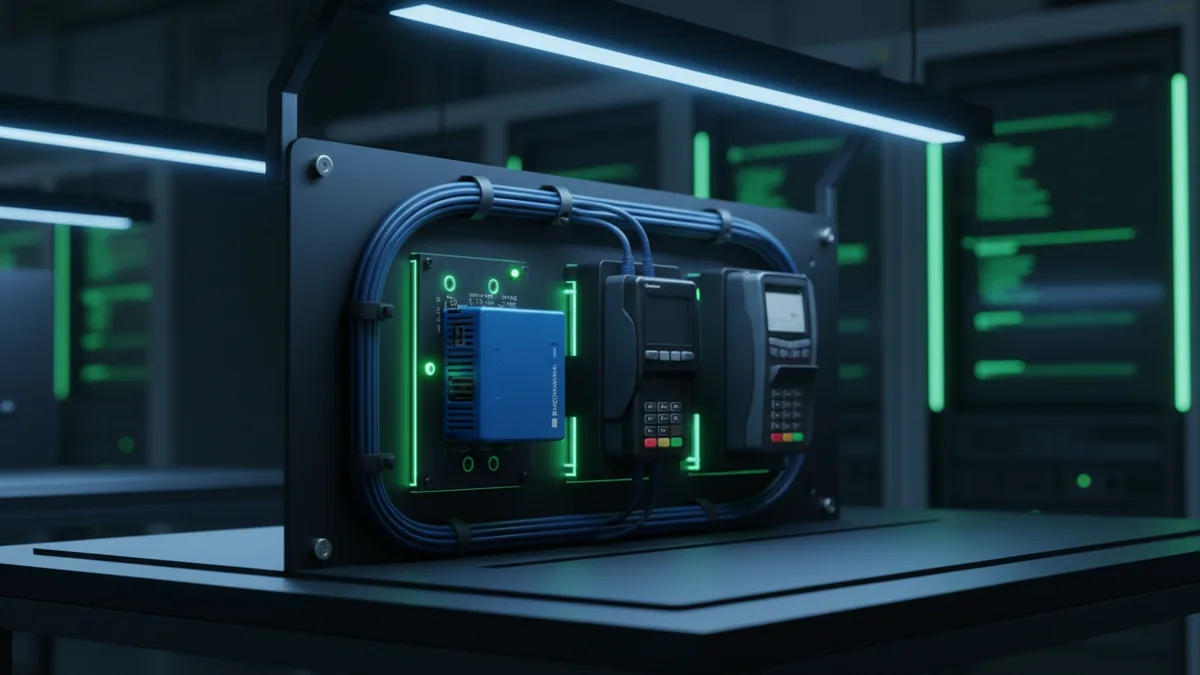
A vending machine credit card payment system typically follows a standard authorization flow, but the details matter because vending is timing-sensitive. A customer taps or inserts a card, the system requests an authorization for the selected product price, and only then does the machine trigger the dispense mechanism. If authorization is declined or times out, the UI should clearly indicate failure without confusing the customer or leaving the machine in a partial state.
Because vending transactions are usually small and frequent, systems must optimize for low latency while staying compliant. A well-designed solution uses secure tokenization so sensitive card data isn’t stored on the machine. It also logs enough context - like the product selection, transaction ID, and machine ID - to trace every vend attempt during reconciliation or disputes.
For multi-vend purchases or add-on payments, payment flows can become more complex. For example, a “pay first, vend later” approach can reduce customer wait time, but it still needs strict safeguards so the machine doesn’t dispense without a confirmed authorization. The safest pattern is typically: confirm authorization before enabling the dispense motor, while still keeping the user experience quick.
Typical states and events you should model
| State | What it means | What the operator needs |
|---|---|---|
| Initiated | The customer starts a payment | Start timestamp, machine ID, selection context |
| Authorized | Payment approved for the amount | Authorization code/reference and amount |
| Dispense started | Machine begins the vend operation | Vend attempt ID and dispense timing |
| Completed / Failed | Vend succeeded or encountered a jam | Outcome codes to reconcile money vs. product |
| Settlement ready | Transaction is eligible for settlement | Settlement export and reconciliation mapping |
Choosing the right vending machine payment systems for your use case
Choosing vending machine payment systems is less about finding the most features and more about matching your environment: device type, connectivity, transaction volume, and compliance expectations. A high-traffic retail lobby might prioritize fast contactless acceptance and strong monitoring, while a remote site might prioritize offline tolerance and robust recovery behavior.
Start by listing your machine capabilities and constraints. Some machines expose simple “approve/reject/dispense” interfaces, while others allow deeper integration for granular product-level inventory control. If you want a coffee machine with payment system that supports multiple drink sizes, modifiers, or loyalty-style behavior, ensure the payment backend can map selections to pricing and properly record line-item context.
Next, evaluate operational requirements. Operators typically need quick incident response when card readers fail, connectivity drops, or authorization rates change. A payment infrastructure should include diagnostic logs, health checks, and tools that reduce the need to roll a truck for every issue. For fleets, consider whether you need remote configuration, versioned updates, and a predictable rollout plan.
A practical selection checklist
- Integration depth: Does the system support your vending controller interface and dispense lifecycle?
- Card acceptance: Does it clearly support contactless and, if needed, chip/PIN fallbacks?
- Offline behavior: What happens when the network is down - queue, decline, or failover?
- Reconciliation exports: Can you map transactions to machines, products, and accounting categories?
- Fraud controls: Are there velocity checks, risk scoring, and configurable block rules?
- Uptime and support: Can you monitor failures and receive actionable alerts quickly?
- Security posture: Tokenization, encryption, least-privilege access, and secure update mechanisms
Integrating payment software with vending hardware
Integration is where many projects succeed or fail, because vending machines are a mix of legacy firmware and time-critical mechanical operations. The payment integration should focus on deterministic state transitions: the payment device must report events reliably, and the vending controller must interpret them consistently. A good approach is to define a tight contract between components - what signals mean, which failures are recoverable, and how retries are handled.
Before you go live, build a test plan that covers edge cases. For example, test what happens if authorization succeeds but the motor jams, if the customer removes the card early, or if the machine reboots mid-transaction. You also want to validate reconciliation: the same transaction should appear exactly once in settlement reporting, even across retries or connectivity recovery.
Operational integration matters too. If your solution uses a backend service, make sure you have a way to correlate machine-side logs with backend transaction records. That correlation is essential when troubleshooting declines, duplicate attempts, or disputes. If you run coffee machine with payment system deployments, also confirm that timeouts align with real brew cycles so the payment state doesn’t end before dispense is truly complete.
Implementation tips that reduce field failures
- Idempotency: Ensure backend endpoints can handle duplicate calls without creating duplicate settlement entries
- Timeout strategy: Align reader response timeouts with your machine UI and mechanical dispense timing
- Inventory-aware vend rules: Block payments for unavailable items when possible, or handle post-authorization refunds safely
- Secure telemetry: Stream events to monitoring with enough context for root-cause analysis
- Rollback plan: Provide a safe way to revert payment app or configuration without bricking machines
Fraud prevention and reliability controls for vending payment systems
Fraud prevention for vending is practical, not theoretical. Common risk patterns include repeated rapid attempts, anomalous transaction sizes, suspicious machine-level behavior, and device tampering. A robust vending machine payment system should combine real-time checks with rules tuned to your operational reality - like typical customer cadence and known device failure modes.
Because vending is often unattended, reliability controls are inseparable from fraud prevention. If a jam causes repeated dispense retries, that may look like suspicious behavior if you only examine payment attempts without vend outcomes. Therefore, you should enrich risk signals with vend state, reader health, and inventory status so you can distinguish a mechanical issue from a malicious one.
Operators also need a clear playbook for exceptions: what constitutes a high-risk decline, when to temporarily disable a reader, and how to audit suspicious activity. A payment infrastructure should support configurable thresholds, safe device disablement, and dispute workflows that connect payment records to vend evidence. This is especially important when you offer coffee machine with payment system setups where customers may attempt multiple taps due to perceived delays.
Fraud and safety measures to consider
| Control | What it does | Where it helps most |
|---|---|---|
| Velocity checks | Limits rapid repeat attempts per card/token and per machine | Stops brute-force testing on unattended devices |
| Risk scoring | Assigns a risk level using context (time, machine, outcomes) | Helps decide whether to authorize or decline |
| Device health monitoring | Detects anomalies like repeated reader errors or sensor patterns | Separates fraud from hardware failures |
| Secure tokenization | Reduces exposure by keeping sensitive data off the machine | Limits impact of device compromise |
| Dispute-ready logs | Stores consistent transaction + vend outcome evidence | Improves chargeback handling speed |
Operations: monitoring, troubleshooting, and scaling to new machines
Once your vending machine payment systems are live, the goal shifts to operational excellence. You need monitoring that highlights the right signals - declines, timeouts, settlement mismatches, and machine connectivity - rather than flooding teams with low-value alerts. A mature setup includes dashboards for payment health and automated alerts routed to the right support channel.
Troubleshooting should be grounded in transaction evidence. When a customer says “I paid but didn’t get the item,” the operator must quickly determine whether the payment was authorized, whether dispense started, and whether the vend completed or failed. That requires clear correlation between customer-facing events and backend transaction records, plus a standardized set of error codes that the machine reports.
Scaling is mostly about repeatability. You want a predictable onboarding process for new machines: provisioning steps, credential handling, configuration templates, and a rollout plan that can be rolled forward or back. If your fleet grows to include coffee machine with payment system units, validate that your integration supports different product catalogs and pricing rules without breaking reconciliation.
What to track day-to-day
- Authorization rate and decline reasons by machine and region
- Payment timeouts and connectivity recovery times
- Vend completion rate and jam/error correlation with paid attempts
- Settlement consistency (paid vs. settled vs. refunded)
- Fraud/risk blocks and their impact on legitimate sales
FAQ
How do vending machine payment systems handle offline situations?
It depends on how the solution is configured and what the acquirer/network allows. Many setups queue certain events for later reconciliation, while others decline transactions during network loss to avoid compliance issues. The key is to define offline behavior clearly so customers and operators see consistent outcomes.
What’s the difference between a vending machine payment system and a payment terminal?
A payment terminal focuses on accepting a card and sending authorization requests, while a vending machine payment system also coordinates with the machine controller to manage the vend lifecycle. That includes price selection mapping, dispense authorization, and reconciliation logs tied to specific vend outcomes.
Can a coffee machine with payment system use the same backend as snack vending?
Often yes, but you’ll typically need additional mapping logic for drink options, modifiers, and longer dispense cycles. The backend should support line-item style context so transactions and outcomes reconcile correctly when a brew takes longer than a typical snack vend.
How do you prevent duplicate charges in a vending machine credit card payment system?
Use idempotency on backend calls and a strict state machine on the machine side. When retries happen due to timeouts or reconnects, the system should detect duplicates by transaction references and avoid double-counting settlement entries.
What information should be included for chargeback and dispute handling?
You generally need the payment authorization reference, timestamps, the machine identifier, the selected product/pricing context, and the vend outcome. Dispute-ready logs help operators show whether authorization occurred and whether the vend completed or failed due to mechanical reasons.
Is fraud prevention possible without hurting conversion?
Yes, but it requires tuning. Combine velocity checks and risk scoring with machine-health signals so you block truly suspicious patterns while allowing legitimate customers to pay successfully. Track the false-positive rate so you can adjust thresholds as your environment learns.
Frequently asked questions
How does a vending machine payment system work end to end?
It accepts a customer payment, requests authorization, triggers the vend only after approval, and records transaction + vend outcomes for reconciliation and settlement. A backend layer typically manages tokenization, dispute evidence, and reporting.
What should I look for in vending machine payment systems for credit cards?
Focus on contactless acceptance support, low-latency authorization flow, secure tokenization, and dispute-ready logs. Also confirm how failures and timeouts are handled so you avoid “paid but no vend” scenarios.
Can a coffee machine with payment system share infrastructure with other vending machines?
Often yes, but you’ll need correct mapping for drink options, pricing, and longer dispense cycles. Ensure transaction records reconcile accurately with the actual brew outcome.
How do vending machine credit card payment systems handle offline connectivity?
Some solutions queue or reconcile later, while others decline payments during outages depending on compliance rules. Your configuration should be explicit so customers and operators see predictable results.
How do you prevent duplicate charges when a customer taps twice?
Use a strict state machine and idempotency on backend processing so retries don’t create duplicate settlement entries. Correlate payment references to machine events and vend outcomes.